
314 Roofing Solutions
GAF Master EliteBBB Accredited A
314 Roofing Solutions is a residential and commercial roofing contractor based at 6824 N. Sam Houston Pkwy W. in Houston....
Google 5.0 (1,170)
Status RCAT verified
The 64 RCAT-listed roofing companies serving Houston, where hurricane wind, hail, Gulf humidity, and the absence of citywide zoning all shape how a roof gets replaced. Compare them below and request free quotes.
314 Roofing Solutions is a residential and commercial roofing contractor based at 6824 N. Sam Houston Pkwy W. in Houston....

All Over Exterior Roofing is a family owned residential and commercial roofing contractor based at 10050 Northwest Freeway, Suite 130,...

All Texans Home Improvement, LLC is a Houston area remodeling and roofing contractor in northwest Harris County, in business since...

American Frontier Roofing, Inc. is a residential and commercial roofing contractor based at 15414 Amber Manor Ln in Houston, Texas,...

American Standard Roofing & Construction Contractors, Inc. is a Houston roofing contractor owned by Brian Schneider, located at 2437 Bay...

Bueno Roofing Inc. is a family owned and operated roofing and exterior contractor based at 5144 East Sam Houston Pkwy...

Courtesy Roofing, Inc. is a family run roofing contractor at 15515 Garrett Road, Houston, TX 77044, in Harris County, working...

Gabriel's Roofing is a Houston roofing contractor owned by Gabriel Montemayor. Its BBB profile shows the business started on 4/13/1998...

Heart Roofing is a small husband-and-wife roofing company in the Westbury area of southwest Houston, operating from 5322 W Bellfort...

JACO Roofing & Construction, Inc. is a commercial and industrial roofing contractor based at 1725 S. Velasco Street in Angleton,...

ABA Roofing Group's Houston office operates at 2002 Wycliffe Dr, under contact Olen Gutierrez, and is a member of the...
Amstill Roofing is a Houston roofing contractor that traces back to September 1, 1974, when Frank Stilley founded the business...

Anvil Roofers is a Houston roofing company founded in 2018 by local residents Caleb Keith and Sam Wooten, who set...

Apollo Roofing is a residential and commercial roofing company based at 21239 FM 529 Road in Cypress, Texas, serving the...

D7 Roofing & Metal is a Houston roofing contractor operating from 8701 W Hardy Rd in the 77022 area of...
DC Pines Roofing is a veteran owned residential and commercial roofing contractor working from a Midtown Houston office at 2808...

Elevation Roofing & Restoration is a residential and commercial roofing and construction company based at 9039 Katy Fwy Suite 230...

EZ Roof and Construction, LLC is a full-service roofing company based at 6613 W Sam Houston Pkwy N in northwest...

Houston Roofing & Construction, LLC works out of 11330 West Rd in northwest Houston (77065) and covers Harris County and...

Integris Roofing is a residential and commercial roofing contractor at 1217 West Loop N Suite 120 in Houston, founded by...

Ja-Mar Roofing & Sheet Metal is a family owned Texas roofing contractor headquartered at 16712 S IH 35 Frontage Rd...

Elite Roofing LLC is a storm restoration focused roofing contractor headquartered at 900 Apollo Street in the Clear Lake area...

HRG Roofing, doing business as The Houston Roofing Group LLC, is a Houston based commercial and residential roofing contractor reachable...
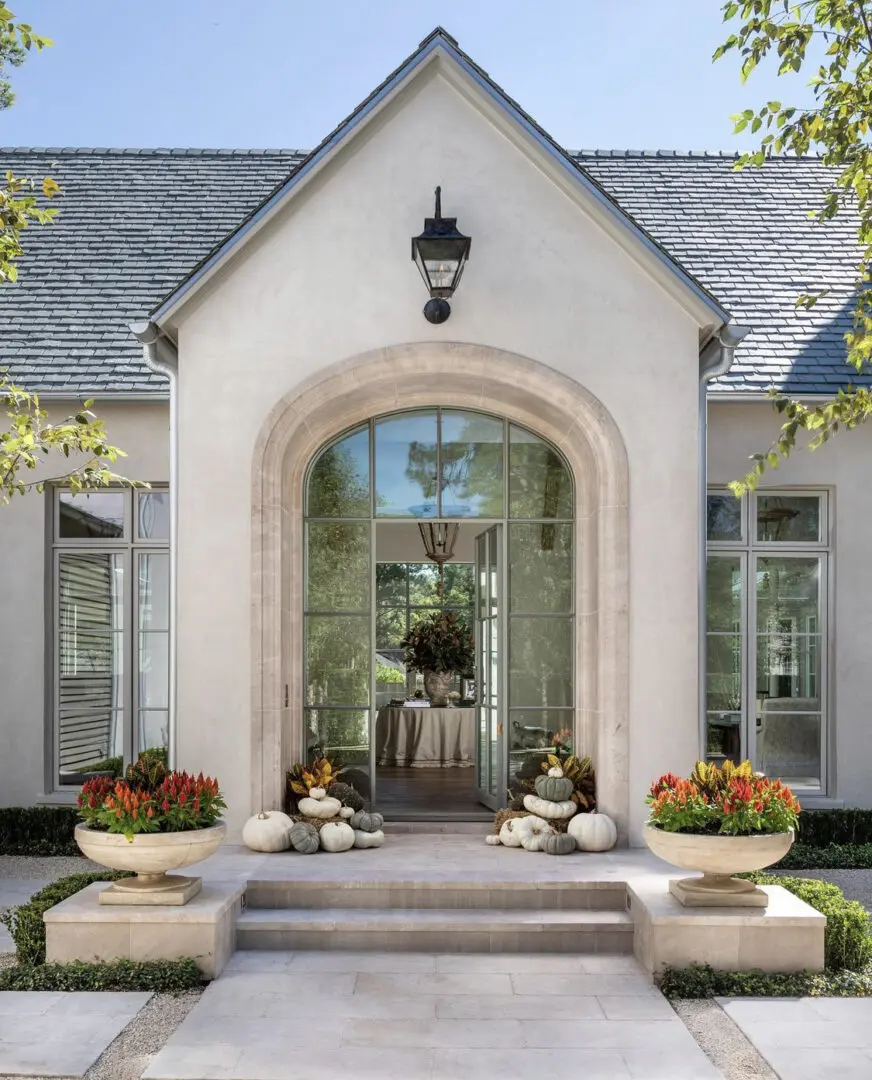
Graziano Roofing of Texas is a Houston tile, slate, and metal roofing specialist operating from 4134 Pinemont Drive. The company...
Houston is the rare Texas metro where a roofer has to think about hurricane wind, hail, Gulf humidity, and a total absence of zoning all at once, and where the city itself, not the state, runs the closest thing Texas has to a roofer credentialing system. There is no Texas roofing license, and Houston has no citywide zoning code (voters rejected it in 1948, 1962, and 1993), so what a homeowner can put on a roof depends on which of three overlapping systems applies to that address: a Houston Archaeological and Historical Commission historic district, a private HOA deed restriction in a master-planned community, or neither. Add two back-to-back 2024 wind events (the May derecho and Hurricane Beryl) on top of Harvey-era rebuilding that is still working through the market, and Houston's roofing conditions are distinct enough that almost nothing on this page would read the same on a Dallas or San Antonio page.
Houston's roofing character changes block by block because land use here is set by deed restrictions and historic-district rules rather than city zoning. Roughly 45% of the city sits inside filed private deed restrictions, and the Houston Development Code (Chapter 42) sets lot size, setback, and parking minimums, but neither one dictates architectural style the way a historic district does.
The Houston Heights, founded in 1891 by Oscar Martin Carter, is the city's best-known concentration of Victorian and craftsman-bungalow homes, and several sections of the Heights are designated historic districts under the Houston Archaeological and Historical Commission (HAHC). Roof material or color changes visible from the public right-of-way require a Certificate of Appropriateness (COA) from the HAHC; a like-for-like reroof in the same material with no change to shape or pitch generally does not. Hand-seamed metal roofing is commonly used in the Heights to replicate the original historic metal roofs.
The Old Sixth Ward became Houston's first Protected Historic District in August 2007 and holds the largest concentration of Victorian houses in the city, roughly bounded by Union Street, Sabine Street, State Street, and Sawyer Street. The same COA process applies here, and restoration-grade roofing (slate look, wood-shake profile, hand-seamed metal) can run 30 to 60% above a standard reroof because of the specialized materials and labor involved.
Boulevard Oaks, designated a city historic district in 2009 and listed on the National Register of Historic Places since February 22, 2002, contains 107 contributing properties across seven subdivisions built between 1923 and 1940, mostly Tudor Revival with Colonial Revival, French Eclectic, Italian Renaissance, and Spanish Eclectic homes mixed in. Steep, complex rooflines are typical of the era, a sharp contrast to the simpler gable roofs on nearby postwar streets.
COA applications for any of these districts are filed online through the city's Historic Preservation Tracker system and are due 22 calendar days before the HAHC's monthly meeting, by noon. Work done without an approved COA can draw a stop-work order and a requirement to restore the roof to its prior appearance, while a COA-approved project can qualify for a 50% discount on the building permit fee.
Outside the historic core, Houston's newer and suburban-feeling neighborhoods run on HOA deed restrictions instead. Kingwood, on the north side near Lake Houston, is organized through community associations such as the Lake Houston Community Association, and Clear Lake, on the southeast side, is governed by the Clear Lake City Community Association (CLCCA). In both, roof material and color approval runs through the association's architectural control committee, not the HAHC, and there is no city-level review at all.
A few other pockets have their own roofing story. Meyerland, which sits along Brays Bayou, had more than 80% of its homes flood in Hurricane Harvey in 2017; many homes there were later lifted above grade or rebuilt, and a large share of Meyerland roofs are now clustered around 7 to 8 years old as a result of that post-Harvey rebuilding wave. Spring Branch is in the middle of a teardown-and-rebuild cycle, with 1950s ranch homes coming down for new construction that carries different roof pitches and attic ventilation needs than the older stock. Bellaire and Memorial combine large, tree-canopied lots with a mix of midcentury ranch homes and large new construction, which means more complex rooflines and more debris exposure from mature trees during wind events.
Roofing permits in Houston are issued by the Houston Permitting Center at 1002 Washington Avenue, Houston, TX 77002, open Monday through Friday, 8 a.m. to 5 p.m. A residential reroof or roof overlay requires a Residential Roofing Permit from this office; commercial reroofs go through a separate Commercial Roofing Permit.
Permits can be applied for, paid, and tracked through the city's iPermits customer portal or the Houston Permit Portal (permits.houstontx.gov), available around the clock for submitting plans, paying fees, and requesting inspections, in addition to in-person or email submission at the Permitting Center. As of the current published fee schedule, a residential reroof permit runs roughly $147, with an additional administrative fee near $33.56 layered on by the city's fee structure. Inspections must be requested at least 24 hours in advance, either through the online portal or by calling (832) 394-8880, and the signed permit and inspection worksheet must be on site when the inspector arrives; a failed inspection that needs a recheck goes through the reinspection line at (832) 394-8840.
Separately, Houston runs a Voluntary Roofer Registration Program through its Code Enforcement office at 3300 Main Street, 2nd Floor (Structural Inspections), Houston, TX 77002. To register, a roofing contractor has to provide a physical business address (a P.O. box is not accepted) and proof of at least $500,000 in general liability insurance that covers roofing operations, underwritten or reinsured by a carrier rated B+ or better in Best's Insurance Reports, with the certificate faxed directly by the insurance carrier rather than submitted by the contractor. The city publishes the resulting Registered Roofing Contractors List and updates it Monday, Wednesday, and Friday afternoons. Homeowners can verify a roofer's registration, confirm insurance status, or report unpermitted roofing work through the city's Roofing Hotline at 713-837-ROOF.
Houston City Council adopted the 2021 edition of the International Codes, including the International Building Code, International Residential Code, and International Existing Building Code, on October 25, 2023, with the new code package taking effect January 1, 2024, along with Houston's own local amendments. Roofing work permitted in Houston today is reviewed against this 2021-cycle code rather than an older edition. Structural and wind-load provisions under the adopted code and its ASCE 7 wind maps place most of Houston in Exposure C, with ultimate 3-second-gust design wind speeds that run well above 130 mph in parts of the metro under the applicable risk categories, reflecting the city's hurricane exposure even though Houston itself sits inland of the immediate coastline.
Houston roofs have to survive Gulf humidity, extreme summer heat, hail, and hurricane-force wind, often in the same year, which is a different combination than a purely hail-driven North Texas market or a purely coastal Galveston-style market faces. Average relative humidity runs around 75%, and the metro logs more than 90 days a year above 90 degrees, a combination that accelerates two specific failure modes. The first is algae staining: Gloeocapsa magma, a blue-green algae common in humid climates, feeds on the limestone filler in standard asphalt shingles and leaves the black streaking familiar on older Houston roofs, which is why algae-resistant shingles with copper or zinc granules are now a standard upgrade quoted by local roofers. The second is heat-driven shingle breakdown from constant UV exposure combined with poor attic ventilation; building code calls for a baseline of 1 square foot of attic ventilation per 150 square feet of attic floor area, but that minimum is frequently not enough in Houston's heat-and-humidity combination, which is why many roofers here spec additional ridge and soffit ventilation on a reroof.
Wind is the other half of the equation. Hurricane Harvey stalled over the Houston area in August 2017 and dropped as much as 4.5 feet of rain in four days, becoming, at roughly $125 billion in damage, the second-costliest storm to hit the continental United States, and while Harvey is remembered for flooding, the sustained wind-driven rain during a stalled tropical system is exactly the exposure that finds weak flashing and marginal shingle seals. On May 16 and 17, 2024, a derecho hit the Houston area with winds near 100 mph, killed at least seven to eight people in Harris County, tore roofs off homes, shattered more than 2,500 high-rise windows downtown, and cut power to more than 900,000 Houston customers. Seven weeks later, Hurricane Beryl made landfall near Matagorda on July 8, 2024, and generated an estimated $2.5 to $3.5 billion in insured Texas wind losses, the costliest wind event in the state since Harvey, with damage adjusters describing wind-creased shingles, lifted ridge caps, damaged flashing, and occasional full-slope blow-offs concentrated on older roofs that had loose shingles or tired seals going into the storm. Hail adds a third layer: Doppler radar has detected hail at or near Houston 279 times on record, including 24 times in the most recent year tracked, and Harris County logged 85 hail reports within 10 miles of the county center, with the 2021 season alone affecting more than 169,000 Harris County properties. Because Houston stacks wind, hail, humidity, and UV rather than facing one dominant hazard, roofers here typically weigh wind-uplift rating, algae resistance, and impact rating together. Class 4 impact-resistant asphalt shingles and standing-seam or coated steel panels both see heavy use for that reason, with metal additionally favored in flood-adjacent rebuilds like Meyerland for its resistance to moisture and corrosion.
Local roofer-published pricing shows a wide spread depending on material and scope. According to a Houston roof-replacement cost breakdown published by Corey Construction Residential Roofing, one of the RCAT-affiliated companies listed on this page, the average roof replacement in the Houston market runs around $12,000, with most homeowners spending between $6,500 and $35,000 depending on size and material. Asphalt shingle work runs roughly $145 to $238 per square (a "square" is 100 square feet of roofing) for an overlay, and $190 to $240 per square for a full tear-off and replacement. Metal roofing runs roughly $680 to $892 per square for an overlay. That same source puts routine residential roof repair work, short of a full replacement, at roughly $850 to $6,861 depending on scope. We could not find a comparably sourced, Houston-specific per-square figure for tile or flat/low-slope roofing from a citable local source, so in keeping with our policy of not inventing prices, that figure is left out here; ask a listed company for a tile or flat-roof quote directly.
Texas insurers evaluate roof age more aggressively than they used to, and Houston homeowners feel this at renewal time. Texas requires insurers to disclose any roof-specific actual cash value (ACV) endorsement at the time it is added to a policy, a disclosure rule that puts Texas ahead of most states, but the practical effect is that a growing number of Texas carriers now schedule roofs onto ACV payout terms, meaning depreciated rather than full replacement-cost payouts, at 10 to 15 years of roof age in some metros rather than the 15-to-20-year mark that used to be standard; the Texas Department of Insurance is direct that a carrier will not pay for a new roof "just because it's old or worn out." Texas is also the only state where every major homeowners carrier uses a percentage-based wind/hail deductible rather than a flat dollar amount, typically 1% to 2% of the Coverage A dwelling limit, which means a $500,000 Houston home with a 2% wind/hail deductible carries a $10,000 out-of-pocket threshold before a hail or hurricane roof claim pays anything.
When a homeowner and insurer disagree on the size of a covered roof loss, Texas policies include an appraisal clause: each side picks its own appraiser, the two appraisers select a neutral umpire, and the umpire's decision on the amount of loss is binding. Texas Senate Bill 458 goes further, requiring this appraisal provision on all personal and residential property insurance policies issued or renewed in Texas on or after January 1, 2026. Separately, it is a criminal offense in Texas, not just a contract violation, for a roofing contractor to advertise or offer to pay, waive, or rebate a homeowner's insurance deductible; this is set out in Texas Insurance Code Section 707.002 and was reinforced by House Bill 2102 in 2019. A first offense is a Class B misdemeanor, punishable by up to 180 days in jail and a $2,000 fine, and later offenses are Class A misdemeanors. Any Texas roofing contract of $1,000 or more tied to an insurance settlement must include written notice that the homeowner is responsible for the deductible. This matters most in the days after a storm like Beryl or the 2024 derecho, when door-knocking crews sometimes push homeowners to sign an Assignment of Benefits agreement before an adjuster has even inspected the roof; a homeowner is under no obligation to sign one on the spot, and doing so hands the contractor the right to negotiate and collect directly from the insurer on the homeowner's behalf.
Texas issues no state roofing license, so the RCAT Member and RCAT Licensed distinctions on this page are the closest thing to a credential a Houston homeowner can check before hiring. RCAT Licensed listings have had their credentials and insurance more closely verified; RCAT Member listings are association members that have not gone through that deeper verification step. On top of that association-level check, we look at whether a company shows up on the City of Houston's Voluntary Roofer Registration Program list, since that registration requires the $500,000 liability insurance minimum described above, verified directly by the carrier rather than self-reported by the contractor.
We currently list 64 roofing companies serving Houston on this page, spanning RCAT Licensed and RCAT Member firms working neighborhoods from the Heights to Kingwood to Clear Lake. Among them are Amstill Roofing, All Over Exterior Roofing, Charter Roofing Company, Corey Construction Residential Roofing, D7 Roofing & Metal, EZ Roof & Construction, and Cazares Roofing, all RCAT Licensed, along with RCAT Member firms including 314 Roofing Solutions, ABA Roofing Group, Anvil Roofers, Apollo Roofing, Boss Hogg Roofing, and Courtesy Roofing. Whether a homeowner is repairing storm damage in a HOA-run subdivision near Clear Lake or filing a Certificate of Appropriateness for a Heights bungalow, starting with a company's RCAT status and city registration status is the fastest way to narrow the list before requesting quotes.